A Conversation on Leadership, Trust, and Real Growth
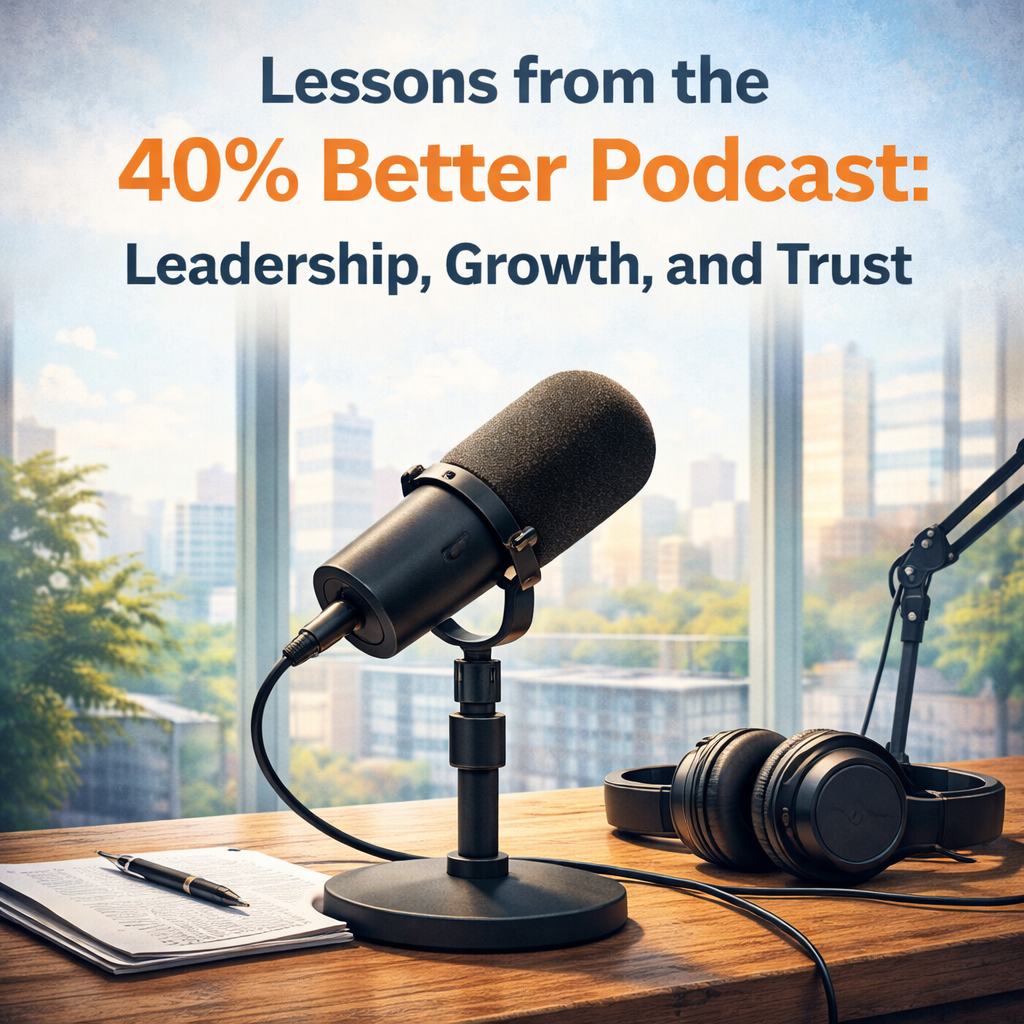 Recently I had the chance to join Bill Lennan on the 40% Better podcast, where he focuses on software team leadership. I enjoyed the tone of the conversation. It felt practical, curious, and grounded in what it actually takes to lead engineering teams day to day.
We covered a lot, but a few themes kept resurfacing. Looking back, they map closely to what I have learned through a career that started in engineering and eventually pulled me into leadership.
Leadership Usually Starts Before You Feel Ready
My first real leadership opportunity was not something I planned out years in advance. I was brought into a small, high intensity development team as a senior engineer, and four months later the team lead had to step away. I was asked to step in as technical lead and project manager.
I was ready in one important sense: I had been showing up, doing the work, and learning the system and the mission. But I was not ready in the way people sometimes imagine leadership readiness. I had nerves. I had self doubt. I had to learn quickly how to communicate progress and plans to stakeholders, not just write code.
That experience shaped a belief I still carry: leadership often starts when you are simply the person who can provide clarity and stability in the middle of a fast moving situation.
Communication Is a Leadership Skill, Not a Personality Trait
A big part of that early transition was learning how to communicate as an engineer, especially with stakeholders. For me, that meant preparation and a mindset shift. The best advice I received was simple: be concise, get to the point, be friendly and open, and do not feel pressure to fill the space.
If people have questions, they will ask. When you leave room for that, you respect their time, and you invite real dialogue instead of performing a status report.
One practice that has helped me over the years is recording my voice and listening back. It is not always comfortable, but it is effective. If you are presenting often, this is one of the fastest ways I know to sharpen how you come across and tighten the message.
Keeping Great People Engaged Takes Intentional Work
Bill asked about morale and engagement, and this is an area where I have learned something that surprised me early on. When morale dips on strong teams, it is often not because people are working too hard. It is because the work has gone stale, or the challenge has faded.
Highly capable people want to grow. If we recruit for competence, we also take on an obligation to keep providing opportunities that stretch the mind. That does not mean constant chaos or unrealistic expectations. It means staying alert to when the work has stopped being a place where people are learning.
A related idea we talked about is intrinsic motivation. In one on ones, I like asking a simple question: what do you want to learn next? I do not care what the answer is. If someone wants to go deeper technically, switch domains, get more client exposure, or even move into something adjacent like sales, my job is to help them explore that path when it makes sense for the team and the business. That kind of support builds trust, and it keeps people energized even when parts of the work are routine.
Trust Is Built in the Hard Moments
Trust is not built when everything is going well. It is built when things are messy and you stay in it with the team.
I shared a story from early in my time at AIS where I wiped out data the night before a production release. It was a painful moment, but it reinforced something I believe strongly: be upfront, take accountability, and focus on the recovery. People can be far more understanding than we expect when you are honest and invested in making it right.
That same dynamic applies more broadly. When projects hit hard times, leaders who stay present, take the message, and absorb some of the pressure earn trust in a way that no team building activity ever will.
Protect Flow, Reduce Noise
We also talked about something that more leaders are paying attention to lately: flow. Engineers do not produce their best work in constant context switching. Once someone cannot get back into flow in a day, there is a point where continuing to grind just increases error rates and creates rework later.
This is an area I want to keep improving in my own organization. Protecting focus is part of leadership. It can mean fewer meetings. It can mean being thoughtful about who truly needs to be in the room. It can mean a clearer approach to planning so work is broken down into smaller, more predictable slices.
The goal is not to squeeze more hours out of people. It is to create conditions where a smaller number of high quality hours actually count.
Behavior Is the Real Message
Toward the end of the conversation, I shared a reminder I try to keep in front of me: your day to day behavior is a language. Your team is watching what you do, not just what you say. If you want a calm, accountable, psychologically safe environment, you have to model it. If you want ownership, you have to demonstrate it. If you want curiosity and learning, you have to make space for it.
I appreciated Bill’s style as a host. He asks questions that get past the surface and into the mechanics of leadership. If you lead software teams, or you are moving into leadership for the first time, I think you will find the episode worth your time.
If you want to listen, you can find the video on YouTube and the audio version wherever you follow podcasts.